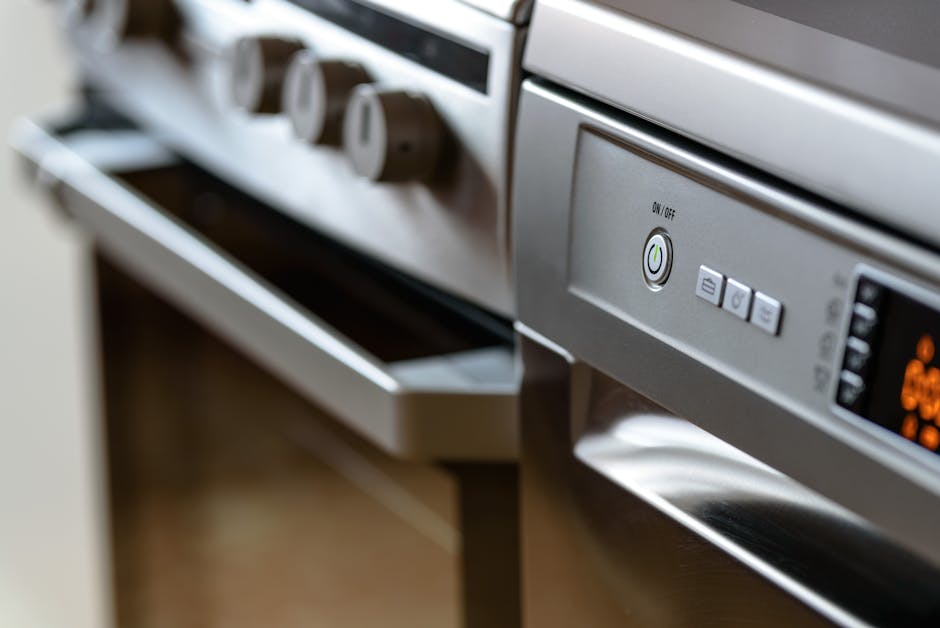
Avoid hidden oven cleaning costs in Bromley: what to know before you book
If you have ever looked at an oven cleaning quote and thought, "That seems fine," only to see the final bill creep up later, you are not alone. Hidden oven cleaning costs in Bromley usually come from small print, vague wording, or assumptions about what the clean includes. The good news? Most of them are easy to spot once you know what to ask.
This guide breaks down the common add-ons, the questions worth asking, and the signs of a clear, trustworthy quote. It is written for Bromley households, landlords, tenants, and busy people who just want the oven sorted without the awkward surprise at the end. Straightforward, practical, no nonsense.
One quick note before we get into it: a good quote should feel clear before anyone picks up a tool. If it does not, that is usually the first warning sign.
Why Avoid hidden oven cleaning costs in Bromley what to know Matters
Oven cleaning looks simple from the outside. Wipe, degrease, polish, done. In practice, the cost can change depending on oven type, level of grease, accessories, access, and whether the company charges extra for things such as trays, glass panels, fans, or hobs. That is where surprise charges creep in.
For Bromley customers, this matters because local homes are not all the same. Some kitchens have compact built-in ovens, some have range cookers, and some have ovens that have not seen a proper deep clean since, well, before the last kitchen repaint. A fair provider will factor this in early. A less careful one might quote low and add on later.
And to be fair, hidden costs are not always deliberate. Sometimes they happen because the job was described badly. But from your point of view, the result is the same: you pay more than you expected. No one enjoys that little moment when the invoice arrives and the number is suddenly not the number you were told on the phone.
That is why checking the full scope before booking is worth the five extra minutes. It can save money, reduce stress, and help you compare services properly instead of comparing apples with a rather greasy orange.
Expert summary: The cheapest oven cleaning quote is not always the best value. A clear, itemised quote with defined inclusions often costs less in the real world because it avoids add-on surprises.
How Avoid hidden oven cleaning costs in Bromley what to know Works
Most oven cleaning services price work in one of three ways: fixed price, tiered pricing, or quote-on-assessment. Each can work well if the terms are clear.
Fixed price means the company charges a set amount for a defined oven type or standard level of soil. This is easy to understand, but only if the definition is actually specific.
Tiered pricing usually separates standard ovens, double ovens, and range cookers. It may also split light, moderate, and heavy cleaning. This can be fair, but you need to know exactly which tier you are being quoted for.
Quote-on-assessment means the cleaner asks a few questions or inspects the oven before confirming the price. It can be helpful for older ovens or very dirty appliances, though you still want the final scope in writing.
Hidden costs tend to appear when one of these things is left vague:
- what counts as a standard oven
- whether the quote includes racks, trays, and liners
- whether fan covers and seals are included
- if cleaning the hob or extractor is extra
- whether heavy carbon or burnt-on grease triggers a surcharge
- if parking, access, or call-out fees apply
- whether VAT is included or added later
If you are comparing providers in Bromley, this is the point where a little awkwardness helps. Ask the awkward question. A decent company will not mind. In fact, the answer often tells you more than the price itself.
Some customers also pair oven cleaning with wider home cleaning needs, especially before guests arrive or a tenancy ends. In those cases, services like deep cleaning or one-off cleaning can be useful if the oven is only one part of the job. That said, keep each service scope separate unless the provider clearly bundles them.
Key Benefits and Practical Advantages
Knowing how to avoid hidden oven cleaning costs does more than protect your wallet. It makes the whole booking process smoother.
- You can compare quotes fairly. A low quote with five extras is not cheaper than a slightly higher all-in quote.
- You reduce decision fatigue. Clear terms make it easier to choose quickly.
- You avoid awkward disputes. No one wants to argue over what "full oven clean" meant after the job is finished.
- You get better service planning. If the company knows the exact oven type and condition, they bring the right products and time.
- You can budget properly. Helpful for landlords, tenants, and busy households alike.
There is also a quality advantage. Providers who are transparent about pricing often tend to be more transparent about process too. That usually means better communication, clearer arrival windows, and fewer unpleasant surprises. Not always, of course, but often enough to matter.
For homeowners who already use a reliable cleaning company for regular upkeep, this can be a natural extension of the same trust. If you already know the team, the pricing conversation is usually much easier because expectations are established.
Who This Is For and When It Makes Sense
This advice is useful for almost anyone booking oven cleaning in Bromley, but a few groups need it especially:
- Homeowners who want a proper deep clean before selling, hosting, or simply reclaiming their kitchen.
- Renters who need the oven cleaned before moving out and cannot afford invoice surprises.
- Landlords and letting agents who need the job done properly and documented clearly.
- Busy families who want to save time and avoid repeat visits.
- People with older ovens because age, wear, and heavy build-up often change the price.
It also makes sense if your oven has been ignored for a while. Let's face it, many people only think about oven cleaning when the smell starts or the glass door looks permanently smoky. If that is your situation, a quick "standard clean" quote may not be enough. Ask what happens if the grease level is heavier than expected.
If the job is part of a wider reset of the home, you may want to look at related services such as domestic cleaning or house cleaning. That can make sense when you want the whole kitchen and surrounding areas brought back to a proper working standard, not just the oven itself.
Step-by-Step Guidance
If you want to avoid hidden costs, do things in the right order. A little structure goes a long way here.
- Identify your oven type. Standard oven, double oven, range cooker, built-in unit, or something else? Even similar-looking ovens can be priced differently.
- Assess the condition honestly. Heavy burnt-on residue, greasy racks, and neglected fans can affect time and cost. It is better to say so upfront.
- Ask for an itemised quote. Make sure the provider states what is included and what is extra.
- Check for common add-ons. Ask about trays, shelves, glass doors, hobs, extractor areas, and protective liners.
- Confirm access details. Is parking easy? Is there a lift? Will the cleaner need to work around pets, school runs, or a narrow hallway?
- Ask about products and methods. Some ovens need specialist treatment. Others just need careful degreasing. The method can affect both cost and outcome.
- Get the total in writing. Even a simple email summary helps avoid the "I thought that was included" problem later on.
- Review before paying. Check that the agreed scope has been completed before you settle the bill.
A small real-world example: someone in Bromley might book a quote for a standard oven clean, only to discover on the day that the extractor hood and two baking trays were assumed to be separate. That is not unusual. The fix is not difficult. The key is asking before the visit, not after the invoice.
If you are also booking other specialist work, a broader service such as deep cleaning or one-off cleaning may actually be more efficient than paying multiple small call-out charges. Sometimes bundled work is cleaner for the budget, pardon the pun.
Expert Tips for Better Results
Here is where the practical detail really helps. These are the habits that tend to separate a smooth booking from a messy one.
- Describe the oven like a person, not a brochure. "Used daily, lots of roasting, glass door is cloudy, racks are greasy" tells the cleaner more than "normal use".
- Ask whether the quote is labour-only or all-in. That single question can save you a headache.
- Check if there is a minimum charge. Some firms have one, especially for small jobs or limited access.
- Be careful with wording like "starting from". It is not a bad phrase by itself, but it often means the real price depends on condition.
- Clarify what "full clean" means. A full clean for one provider may mean something different for another. Annoying, yes. Very common, also yes.
- Ask how cancellations and reschedules are handled. If access falls through or plans change, the policy matters.
- Keep a screenshot or email of the quote. Old-fashioned? Maybe. Useful? Definitely.
In our experience, the simplest safeguard is just asking one direct question: "What would make this price go up on the day?" A proper answer should be specific, not vague. If the reply sounds slippery, take notice.
And one more thing. A cleaner who explains pricing clearly usually explains the work clearly too. That matters when your oven has stubborn marks near the fan or a stubborn patch of carbon that looks, frankly, like it has moved in permanently.
Common Mistakes to Avoid
Most pricing problems are preventable. The trouble is, they are easy to miss when you are just trying to get the oven cleaned quickly.
- Choosing purely on the lowest price. Cheap quotes can become expensive once extras appear.
- Not confirming the oven type. A double oven is not a single oven, and a range cooker is not a standard one.
- Assuming accessories are included. Trays, racks, and glass doors may be billed separately.
- Ignoring access issues. Parking restrictions or difficult entry can sometimes change the quote.
- Skipping written confirmation. Verbal quotes are easy to misunderstand.
- Not checking payment terms. A clear provider should explain how and when payment is taken. See also payment and security for the kind of clarity trustworthy services should provide.
- Forgetting to ask about aftercare. Some ovens need cooling time or simple usage advice after cleaning.
A slightly messy kitchen should not turn into a slightly messy billing process. Keep the two separate.
Tools, Resources and Recommendations
You do not need a toolkit the size of a small van to protect yourself from hidden costs. A few simple things are enough.
- Your phone notes app for keeping quote details together.
- Photos of the oven if you are requesting a remote quote. One inside shot and one of the door usually help.
- A short question list so you do not forget anything while the conversation is happening.
- Basic measurements if you have an unusual cooker or limited kitchen space.
- Your tenancy or inventory needs if you are moving out, since those can shape the standard required.
On the service side, it can help to look at the provider's wider information pages before you commit. A company that publishes its terms and conditions, insurance and safety information, and health and safety policy is usually taking operations seriously. That does not guarantee perfection, but it is a reassuring sign.
If you are comparing a one-off oven clean with a broader clean, you might also look at oven cleaning directly, or pair it with related home services such as window cleaning or carpet cleaning when you want the place to feel properly refreshed all at once. That said, only combine services if the scope is clear and the total still makes sense.
If sustainability matters to you, you may also want to check a company's recycling and sustainability approach. It is a small detail, but it often says something about how thoughtfully the business works overall.
Law, Compliance, Standards, or Best Practice
For most domestic oven cleaning jobs, you are not dealing with complicated legal rules. Still, there are sensible UK best-practice expectations worth keeping in mind.
First, pricing should be transparent enough that you can understand what you are paying for before work begins. That is not just good manners; it is good business practice. A quote should not rely on hidden assumptions or vague "subject to inspection" wording without explanation.
Second, if a cleaner is entering your home, safety matters. Good practice includes sensible product use, appropriate handling of hot or fragile components, and clear communication about any limitations. If an oven needs to cool first, it needs to cool first. No shortcuts there.
Third, written terms help everyone. They reduce disputes over scope, extras, cancellations, and payment timing. For a service provider, clear documentation is a sign of professionalism. For a customer, it is your best defence against confusion.
Finally, if you are comparing providers, look for practical signs of responsible operation: insurance information, clear complaints process, privacy information, and plain-English policies. Those details do not clean an oven, of course, but they do show how the company treats customers behind the scenes.
If your cleaning needs stretch beyond the oven, it may help to understand how related services are described. For example, end of tenancy cleaning often has stricter expectations than ordinary domestic cleaning, while after builders cleaning can involve dust, residue, and access issues that affect time and pricing. Different jobs, different standards.
Options, Methods, or Comparison Table
When people talk about "oven cleaning costs", they are often comparing not just prices but pricing models. Here is a simple way to think about it.
| Pricing approach | What it usually means | Good for | Watch out for |
|---|---|---|---|
| Fixed price | One set charge for a clearly defined job | Standard ovens and straightforward bookings | Hidden exclusions if the definition is vague |
| Tiered price | Different prices for different oven types or conditions | Homes with varied cooker sizes | Confusion over which tier applies |
| Assessment-based quote | Price confirmed after questions or inspection | Older, heavily used, or unusual ovens | Unclear final figure if scope is not written down |
| Bundled service | Oven cleaning included as part of a wider clean | Move-out cleans or whole-home refreshes | Paying for services you do not actually need |
There is no single "best" option for everyone. If your oven is standard and in decent shape, fixed pricing can be excellent. If it is a range cooker with years of grease build-up, an assessment-based quote may be fairer. The important thing is clarity. Always clarity.
For some households, combining services through a broader provider such as cleaners or home cleaners is practical because it reduces back-and-forth and may simplify scheduling. For others, a dedicated oven clean is all that is needed. Either is fine if the scope is honest.
Case Study or Real-World Example
A Bromley family booked an oven clean before a weekend gathering. The initial phone quote sounded sensible: a standard oven, light degreasing, quick turnaround. But when the cleaner arrived, the oven was a double unit rather than a single, the racks were heavily burnt-on, and the extractor area above the hob had not been mentioned at all.
Now, this could have turned into a pricing headache. Instead, the provider paused, explained the difference clearly, and gave a revised quote before starting. The family agreed because they understood exactly what had changed. No drama. No unpleasant surprise at the end. That is how it should work.
The useful lesson is not that a revised quote is bad. Sometimes it is the fairest thing possible. The lesson is that the change should happen before the work, not after it. Most tension comes from timing, not price alone.
In a second example, a tenant preparing for checkout had asked for a simple oven clean but forgot to mention the heavy carbon on the door glass. Because they had sent photos in advance, the quote had already accounted for it. A small habit, but it saved them the awkward "oh, that's extra" conversation on the day.
Practical Checklist
Use this quick checklist before you book. It is simple, but it catches most of the common issues.
- Have I confirmed the exact oven type?
- Does the quote say what is included?
- Are racks, trays, glass, fan covers, and hob areas mentioned?
- Have I asked what could increase the price?
- Is VAT included if relevant?
- Do I understand the cancellation or rescheduling terms?
- Have I shared photos if the oven is old or heavily soiled?
- Is the total cost confirmed in writing?
- Have I checked for parking or access complications?
- Do I know how payment works?
If you can tick most of those off, you are in a much stronger position. And if you cannot, do not panic. Just ask a few more questions. That is usually enough.
Get a free quote today and see how much you can save.
Conclusion
Hidden oven cleaning costs in Bromley are usually avoidable. The trick is not to become suspicious of every quote, but to become precise. Ask what is included, how the price changes, and whether the final figure is fixed or conditional. That one habit will save you a lot of bother.
When pricing is clear, the whole service feels easier. You know what you are paying for, the cleaner knows what to expect, and the job gets done without that uncomfortable end-of-visit haggling that nobody wants in a kitchen. If you take only one thing from this guide, make it this: clarity before booking beats surprise after cleaning, every time.
And honestly, once the oven is gleaming again and the kitchen smells fresh instead of faintly burnt, you will be glad you asked the extra questions. It is a small win, but a satisfying one.
Frequently Asked Questions
What counts as a hidden oven cleaning cost?
A hidden cost is any charge that was not clearly explained before booking. Common examples include extra fees for racks, trays, heavy grease, extractor areas, or difficult access.
How can I tell if an oven cleaning quote in Bromley is fair?
Look for a quote that clearly states the oven type, what is included, and what might cost extra. A fair quote is usually specific rather than vague.
Should I expect extra charges for a very dirty oven?
Sometimes, yes. Heavy burnt-on grease or carbon can take more time and specialist products. The important part is that this is explained before the work starts.
Are trays and racks usually included in oven cleaning?
Not always. Some providers include them as standard, while others charge separately. Ask directly so you do not have to guess.
Is a fixed-price oven clean better than a quote-based one?
Neither is automatically better. Fixed pricing works well for standard jobs, while quote-based pricing can be fairer for older, larger, or unusually dirty ovens.
What should I ask before booking oven cleaning in Bromley?
Ask what is included, whether VAT is included, what might increase the price, how long the job should take, and whether parking or access could affect the cost.
Can I save money by combining oven cleaning with other services?
Sometimes. If you need more than one area cleaned, a broader service such as house cleaning or deep cleaning may be more cost-effective than separate visits.
Do I need to be home during the oven clean?
Usually yes, at least for arrival, access, and final sign-off. Some providers may be flexible, but it is best to confirm in advance.
What if the price changes on the day?
If the condition or oven type is different from what was described, a revised quote may be reasonable. It should always be explained before any extra work begins.
How do I avoid invoice disputes after the job?
Keep the quote in writing, ask for a clear scope, and confirm any extras before cleaning starts. A quick message or email can prevent most misunderstandings.
Are there any quality signs I should look for besides price?
Yes. Clear terms, insurance information, a complaints process, and transparent payment details are all reassuring signs that the company is well organised.
What is the simplest way to protect myself from hidden costs?
Send photos, ask for an itemised quote, and ask one direct question: "What could make this price go up?" That usually cuts through the confusion fast.
If you are still weighing up your options, choose the provider that answers clearly and calmly. That kind of clarity is worth a lot, and it tends to show up in the work too.